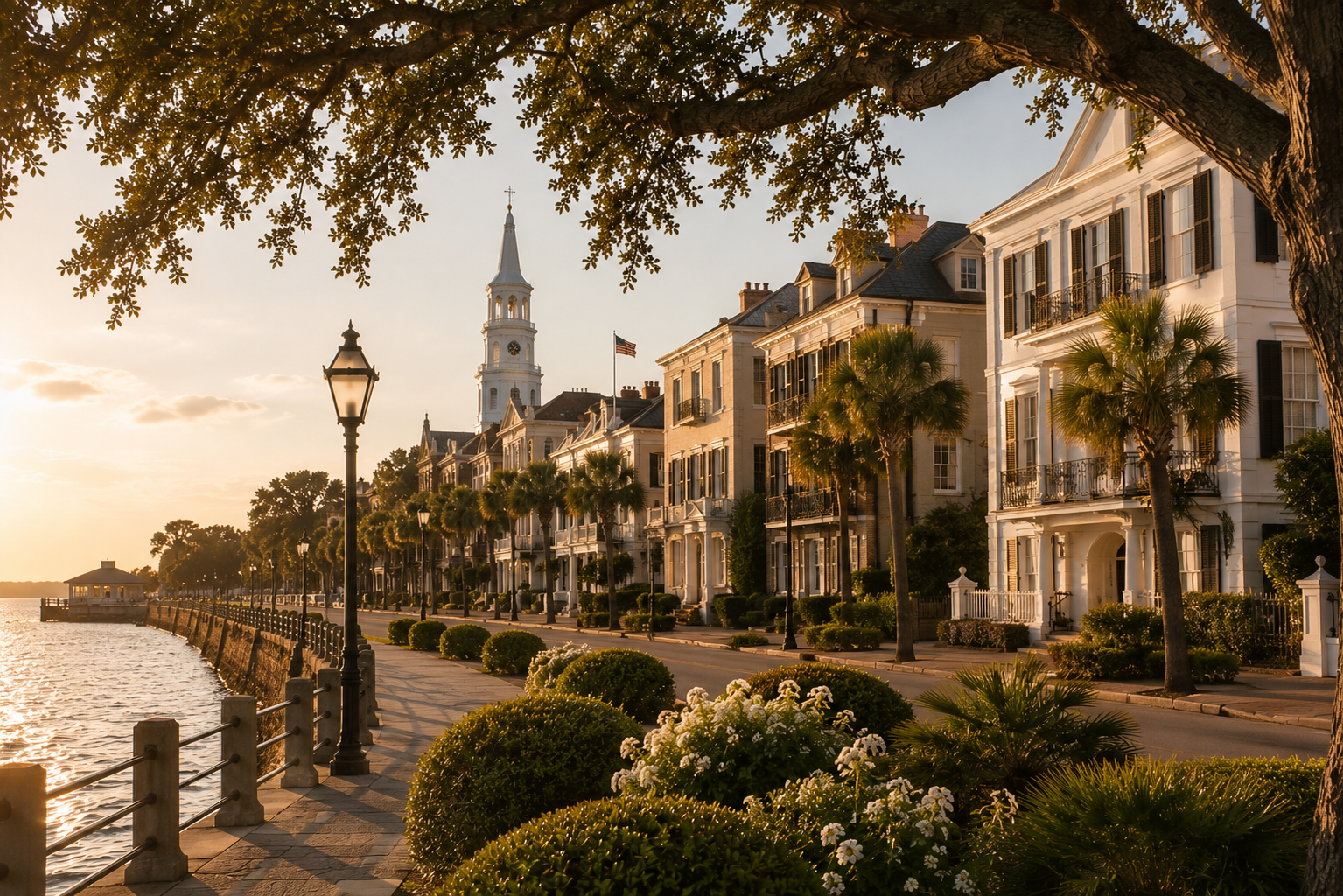
Downtown Charleston is the beating heart of the Lowcountry, a walkable historic peninsula where pastel single houses, cobblestone lanes, and harbor breezes have defined Southern gracious living for more than three centuries. For buyers, it is one of America's most storied and sought-after addresses, blending museum-quality architecture with a genuinely modern, car-optional lifestyle. This guide walks you through what it is like to live, buy, and belong here.
Overview
Downtown Charleston occupies the narrow peninsula between the Ashley and Cooper rivers, ending where the two waterways meet at Charleston Harbor. Within a compact footprint you will find some of the oldest continuously inhabited streets in the country, a nationally significant historic district, a thriving culinary scene, and a residential real estate market unlike anywhere else in the South. The area is often described in sub-districts, from the genteel enclave of South of Broad to the lively Upper King corridor, and each carries its own rhythm and price point.
What unites the peninsula is a rare sense of place. Church steeples still define the skyline, horse-drawn carriages roll past homes built before the American Revolution, and residents move through their days largely on foot. For those relocating from larger metros, downtown offers a walkable, intimate scale that feels both historic and very much alive. It is a place where your morning coffee, favorite restaurant, gallery, and the water are all within a few blocks of your front door.
Neighborhood History
Founded in 1670, Charleston is among the oldest cities in the United States, and the peninsula was its original settlement. As a colonial port, the city grew wealthy through maritime trade, and that prosperity is written into the streetscape today in the form of grand merchant homes, walled gardens, and ecclesiastical landmarks. St. Michael's Church and St. Philip's Church, both cornerstones of the skyline, date to the eighteenth century and remain active congregations and beloved architectural touchstones.
The peninsula weathered earthquakes, hurricanes, fires, and the Civil War, and remarkably preserved much of its early fabric through it all. In the twentieth century, Charleston became a pioneer of American historic preservation, establishing one of the nation's first historic districts and the Board of Architectural Review to guard its character. That stewardship is precisely why Rainbow Row, the Battery mansions, and countless single houses still stand, and why buying here means becoming a caretaker of living history.
What Makes This Community Unique
Few neighborhoods in the country combine such deep history with such daily livability. Downtown Charleston is walkable to a degree that is genuinely rare in the South, with residents strolling to the market, the harbor, and dinner rather than driving. The scale is human, the architecture is protected, and the community is tightly knit, with long-standing neighborhood associations, garden clubs, and church congregations forming the social fabric.
The peninsula also carries a cultural gravity that draws visitors from around the world while still feeling like home to those who live here. The presence of the College of Charleston lends youthful energy and a steady calendar of lectures, concerts, and sports, while the working harbor and cruise and port activity remind you this is a real, functioning city rather than a museum piece. That balance of preservation and vitality is the essence of downtown's appeal.
Real Estate Market Overview
Downtown Charleston is a premium market, with prices reflecting the scarcity of historic inventory and the desirability of the location. Homes generally range from roughly $900K for a modest historic condo or a smaller single house to $12M and beyond for a fully restored antebellum mansion on the Battery. Because the housing stock is finite and largely protected from redevelopment, well-maintained historic properties tend to hold their appeal strongly over time.
Buyers should expect a market defined by character and individuality rather than uniformity. No two historic homes are alike, and pricing depends heavily on lot, restoration quality, off-street parking, and proximity to the water. Condominiums and newer construction along the upper peninsula offer more attainable entry points, while South of Broad and the Battery represent the pinnacle of Charleston prestige. Working with an agent who understands the nuances of historic properties is invaluable here.
Home Styles & Architecture
Downtown Charleston is essentially an open-air catalog of American architectural history, and part of the joy of buying here is choosing the era and style that speaks to you. From colonial-era masonry to Federal townhouses and antebellum piazzas, the peninsula offers a depth of craftsmanship that is impossible to replicate.
The Charleston Single House
The single house is the peninsula's signature form, one room wide and turned sideways to the street so its long side and tiered porches, known locally as piazzas, catch the harbor breeze. The formal front door often opens not into the home but onto the piazza, a distinctly Charleston touch. These homes are prized for their proportion, their private side gardens, and the way they knit together to form intimate, shaded streets.
Georgian & Federal Mansions
The grand merchant and planter houses of the eighteenth and early nineteenth centuries showcase Georgian symmetry and refined Federal detailing, with elegant fanlights, plaster cornices, and sweeping staircases. Many cluster South of Broad and along the Battery, where their scale and craftsmanship command the highest prices on the peninsula. Restoring one is a labor of love governed by careful review, but the result is a home of extraordinary presence.
Victorian, Condos & Contemporary Living
Beyond the earliest eras, the peninsula includes ornate Victorian homes, converted historic buildings, and a growing selection of thoughtfully designed condominiums, especially along the upper King Street corridor. These options open downtown living to buyers who want walkability and history with lower maintenance, and they have broadened the range of who can call the peninsula home.
Luxury Homes
At the top of the market, Downtown Charleston delivers some of the most coveted luxury real estate in the Southeast. These are typically meticulously restored historic mansions with formal gardens, carriage houses, and interiors that pair original craftsmanship with discreetly modern comforts. Buyers at this level are acquiring not just square footage but provenance, a home with a name, a documented history, and a place in the story of the city.
Luxury here is defined by authenticity rather than newness. A restored Battery mansion with harbor views, a South of Broad garden home behind a wrought-iron gate, or a King Street penthouse above the shopping district each represent a different expression of the peninsula's high end. Compared with luxury enclaves on Daniel Island or in Mount Pleasant, downtown trades expansive lots for irreplaceable history and unrivaled walkability.
Waterfront Homes
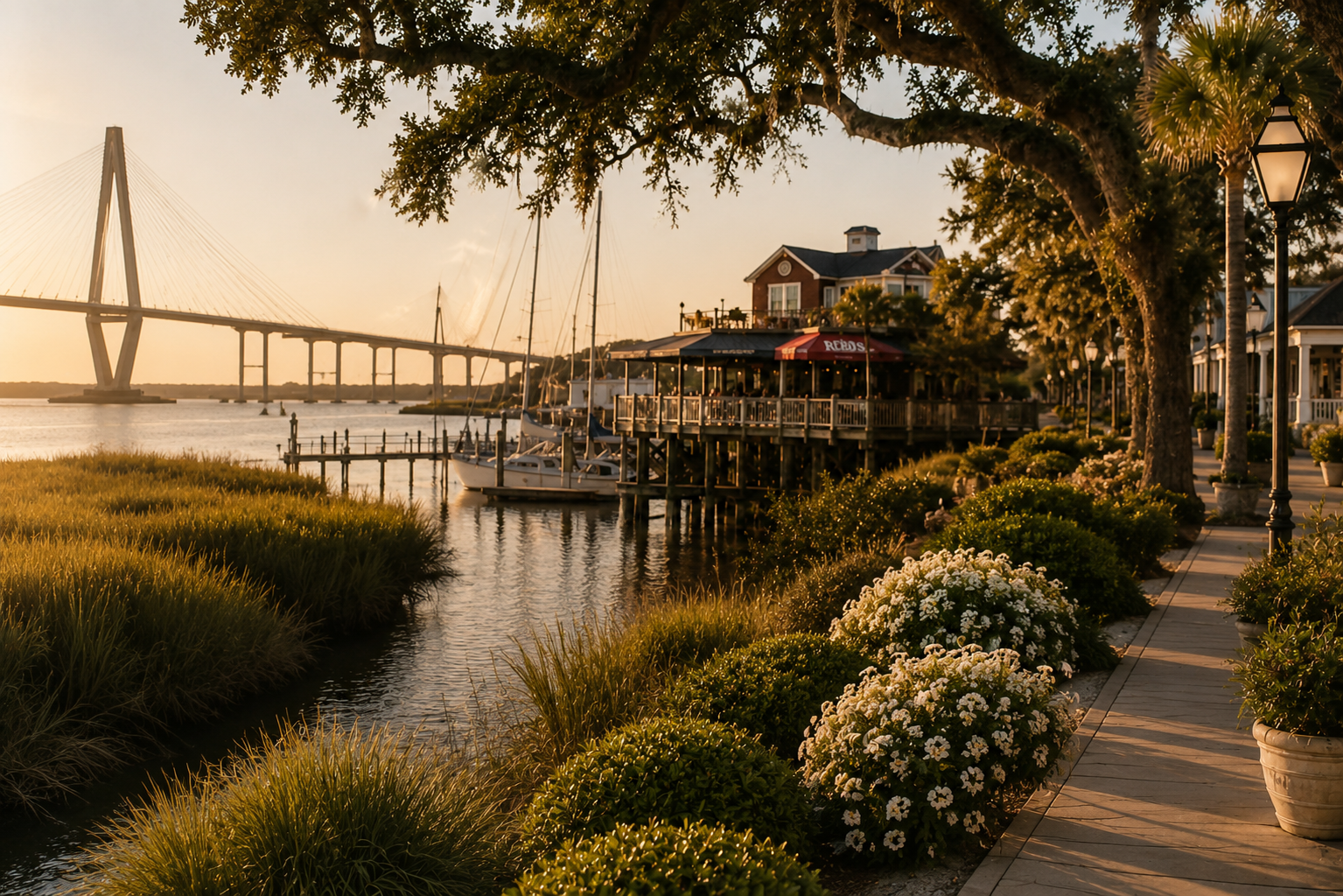
Water is central to the peninsula's identity, and waterfront property here is among the most prestigious in the state. The Battery, where High Battery and Murray Boulevard trace the harbor's edge, is the most celebrated stretch, lined with antebellum mansions that look out over the confluence of the rivers and the harbor beyond. Homes with direct harbor frontage or protected views are exceedingly rare and command a significant premium.
Beyond the harbor itself, buyers will find marsh-front and river-view properties along the peninsula's edges, as well as homes near Colonial Lake, a tidal saltwater pond ringed by a beloved promenade. Waterfront buyers should factor flood zones and insurance into their planning, but the reward is a front-row seat to sunrises over the Cooper and sunsets that set the whole harbor aglow.
Lifestyle
Life downtown is defined by walkability and a slower, more sensory pace. Residents run errands on foot, greet neighbors on the piazza, and organize their days around the harbor, the gardens, and the city's remarkable food and arts scene. Many households find they use their cars only occasionally, reserving them for weekend trips out to the beaches or the suburbs.
The social calendar is rich year-round, from spring garden tours and festivals to holiday candlelight strolls through the historic district. It is a lifestyle that rewards curiosity and community involvement, and one that pairs walkable culture and waterfront access with a graceful, low-maintenance way of living.
Parks & Outdoor Recreation
For a dense historic district, downtown offers a surprising wealth of green and blue space. White Point Garden at the tip of the peninsula is the crown jewel, a shaded oak-and-palmetto park at the Battery where residents walk, picnic, and take in the harbor. Waterfront Park, with its iconic Pineapple Fountain and long pier, provides swings, lawns, and sweeping views over the Cooper River.
Colonial Lake anchors the western side of the peninsula with a popular walking loop, while smaller pocket parks and the greenways along the water invite jogging, cycling, and evening strolls. For beach days, residents make easy trips across the bridges to Sullivan's Island, where wide Atlantic beaches and a laid-back village atmosphere are just a short drive away.
Restaurants & Dining
Charleston is one of the country's great food cities, and the peninsula is its epicenter. Celebrated restaurants such as FIG and Husk have helped define contemporary Lowcountry cuisine, championing local farms, heritage grains, and coastal seafood. Intimate spots like Chez Nous offer a more hidden, romantic experience with a menu that changes daily, and countless oyster bars, bistros, and Southern institutions fill the streets in between.
What makes dining downtown special is that it is all within reach on foot. A typical evening might begin with cocktails on a rooftop overlooking the steeples and end with a walk home along quiet, gas-lit streets. For food-focused buyers, few neighborhoods in the country put this much culinary talent within a few blocks of home.
Coffee Shops
The peninsula's cafe culture is thriving, offering plenty of neighborhood spots to start the morning or settle in with a laptop. Second State Coffee has become a local favorite for carefully sourced beans and a warm, community feel, while Harken Cafe pairs excellent espresso with pastries in a beautifully restored historic space.
Beyond these, independent roasters and cafes are woven throughout the historic district and up along King Street, making it easy to find a familiar barista within a short walk of wherever you live. For remote workers and students alike, this everyday coffee-shop rhythm is a quiet but genuine part of downtown's appeal.
Shopping (King Street)
King Street is downtown Charleston's premier shopping spine, a historic corridor that runs the length of the peninsula and blends national flagships, independent boutiques, antique dealers, and design showrooms. Lower King is known for its antiques district, Middle King for fashion and lifestyle retail, and Upper King for a lively mix of shops, restaurants, and nightlife.
The result is a walkable retail experience that feels curated rather than corporate, set against a backdrop of preserved storefronts and gas lamps. Residents can furnish a home, refresh a wardrobe, and pick up groceries and gifts without ever leaving the peninsula, which is a rare convenience for such a historic setting.
Schools
The peninsula has access to a mix of public, magnet, charter, and private schools. Memminger Elementary serves the downtown community, while Buist Academy is a magnet program that draws applicants from across the county. Charleston Progressive Academy offers another public option, and several independent schools round out the choices.
As with any historic urban district, buyers should research attendance zones, magnet and charter admissions, and private options carefully, since enrollment can be competitive. Buyers are encouraged to verify school assignments and review the latest information directly through the school district and South Carolina Department of Education.
Entertainment & Local Attractions
Downtown is Charleston's cultural core, home to historic theaters, art galleries, museums, and a year-round schedule of festivals, including internationally recognized performing-arts programming. Rainbow Row, the pastel row of Georgian merchant houses along East Bay Street, is among the most photographed sights in America, and the surrounding streets reward endless exploration on foot.
History is everywhere, from house museums and church cemeteries to the harbor forts visible offshore. Between the College of Charleston's cultural calendar, the working waterfront, and the constant flow of markets, tours, and events, residents rarely lack for something to do. It is a neighborhood where entertainment is woven into daily life rather than confined to a night out.
Commute Times
One of downtown's greatest practical advantages is that many residents barely commute at all, walking or biking to work, school, and dining. For those who do drive, the peninsula connects to the wider region via a network of bridges, with Mount Pleasant reachable across the Ravenel Bridge, West Ashley just across the Ashley River, and Daniel Island a short drive up the Cooper.
Commutes to the suburbs typically run in the range of fifteen to thirty minutes depending on traffic and destination, with Summerville sitting farther out to the northwest for those seeking more space. Peak-hour bridge traffic is the main variable to plan around, but for anyone working within the medical or business districts on the peninsula, the daily commute can be delightfully short.
Nearby Employers
The peninsula anchors one of the region's largest employment hubs. The Medical University of South Carolina, known as MUSC, and its surrounding medical district form a major economic engine, drawing physicians, researchers, nurses, and staff who value living close to work. The College of Charleston adds a substantial base of faculty and staff, and the working port and cruise operations contribute maritime and logistics jobs.
Beyond these institutions, downtown supports a dense concentration of law firms, financial and professional services, hospitality businesses, and a growing creative and tech scene. For many buyers, the ability to walk or bike to an office in the medical district or the historic business core is a decisive reason to choose peninsula living.
Who This Neighborhood Is Best For
Downtown Charleston is ideal for buyers who prize walkability, history, and cultural richness over large lots and suburban space. It suits those who work on the peninsula and want a short commute, buyers seeking an elegant, low-maintenance lifestyle near the water, and anyone who wants to own and steward a piece of the past.
It is also well suited to those who travel or split time between homes, since the lock-and-leave nature of many historic condos and townhomes pairs well with a frequent-travel schedule. Buyers who want sprawling yards, brand-new construction, or the lowest possible carrying costs may find better fits in communities like West Ashley, Summerville, or Daniel Island, but for a genuinely urban, historic Southern lifestyle, nothing rivals the peninsula.
Pros & Considerations
Every exceptional neighborhood comes with trade-offs, and downtown is no exception. Understanding both sides helps buyers enter the market with clear expectations and confidence.
The Draws
The peninsula offers unmatched walkability, world-class dining and culture, protected historic architecture, and a strong sense of community. Homes carry genuine prestige and irreplaceable character, and the ability to live largely car-free is a lifestyle few American cities can match. For many, simply walking home along the Battery at dusk is reason enough.
Things to Weigh
Historic ownership brings responsibilities. Renovations are governed by the Board of Architectural Review, which protects the district but can lengthen and shape projects. Parking is limited, older homes require attentive maintenance, and flood insurance is an important line item near the water. Prices are premium, and inventory is scarce, so patience and preparation are essential.
Current Market Insights
Demand for the peninsula remains resilient, driven by its irreplaceable inventory, its national profile, and steady interest from both relocating buyers and second-home purchasers. Because so much of the housing stock is historic and protected, supply cannot simply expand to meet demand, which underpins the enduring desirability of well-located, well-restored homes.
For buyers today, the keys are preparation and local expertise. Understanding flood zones, historic-review requirements, parking, and the distinctions between sub-areas like South of Broad and Upper King can make the difference between a smooth purchase and a costly surprise. Whether you are drawn to a Battery mansion, a single house with a hidden garden, or a King Street condo, working with an agent who knows the peninsula intimately ensures you buy with clarity and confidence.